Cold Cranks: Why Older Cars Lose the Battery Fight First
November 10, 2026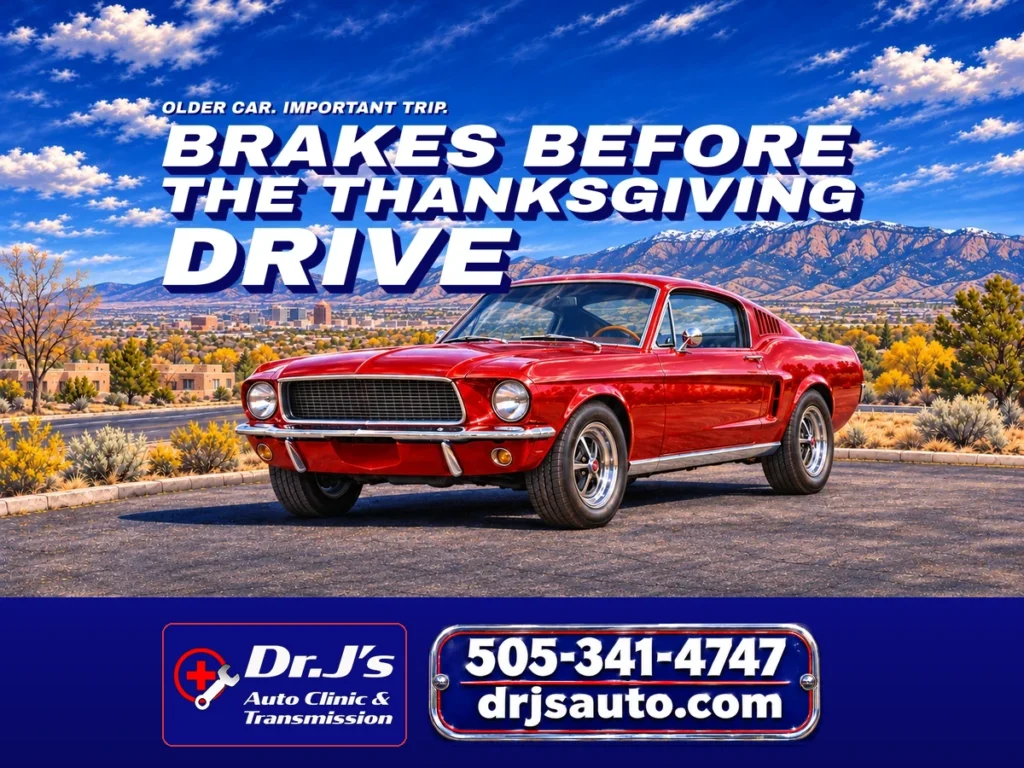
Thanksgiving puts more Albuquerque cars on the highway than any other week of the year, and many of them are older cars carrying a full load of family and luggage. Brakes that feel acceptable around town get a harder test on the long grades out of the city. Through November 30, our Spend More Save More coupon takes up to $75 off any repair, brake work included, so this is the week to deal with a noise or a soft pedal you have been putting off.
- Squealing, grinding, a pulsing pedal or a pull to one side all mean the brakes need attention before a trip
- Older cars have parts newer drivers forget about: rear drums, rubber brake hoses and aging brake fluid
- Long descents like La Bajada and Tijeras Canyon build heat, and heat is what exposes weak brakes
Warning Signs Before You Leave
Brakes almost always tell you when something is wrong. The trick is to listen in the weeks before the trip and not on the highway. These are the signs worth acting on now:
- A high squeal when you brake, which is often the wear indicator touching the rotor
- Grinding, which usually means the pad material is gone and metal is contacting metal
- A pedal that pulses under your foot, a common sign of an uneven rotor
- A pedal that feels soft or travels farther than it used to
- The car pulling left or right when you brake
- A brake warning light on the dash
Grinding and a soft pedal are the two that should keep the car off the highway until it has been checked. Grinding damages rotors quickly, which turns a pad replacement into a larger repair. A soft pedal can point to a fluid or hydraulic problem, and that is not one to test at 75 miles per hour.
What Changes on an Older Car
Pads and rotors wear on every car. An older car adds parts that age by the calendar as much as by the mile. Many cars and trucks from the 1990s and 2000s still use drum brakes in the rear, with shoes, springs and wheel cylinders that are easy to forget because they are out of sight. Rear drums that are out of adjustment make the front brakes do more than their share.
Rubber brake hoses are the next concern. After fifteen or twenty years, a hose can crack on the outside or swell on the inside, and a swollen hose can hold pressure against a caliper so the brake drags and overheats. Calipers and their slide hardware also corrode over time and begin to stick. None of this shows up in a quick glance at pad thickness, which is why a brake inspection on an older car should include hoses, hardware and the rear brakes.
Then there is the fluid. Brake fluid absorbs moisture from the air over the years. Water in the fluid lowers its boiling point and corrodes the system from the inside. If you cannot remember the last time the brake fluid was changed, it is probably due.
Why the Grades Around Albuquerque Matter
Leaving town in almost any direction means a long hill. La Bajada on I-25 toward Santa Fe and Tijeras Canyon on I-40 east both ask the brakes to shed a lot of heat, especially in a loaded car. Heat is where marginal brakes fail. Worn pads fade sooner, old fluid can boil and leave the pedal spongy, and a dragging caliper gets hot enough to smell.
You can help by downshifting on long descents and braking firmly in short stretches instead of riding the pedal all the way down. That habit only goes so far, though. It works best when the brakes are in good condition to begin with.
Get It Checked This Week
A brake inspection before the holiday is a short visit, and it costs far less than a repair on the road in another town. If the car needs work, the Spend More Save More coupon takes $25 to $75 off, depending on the repair total, through November 30, 2026. Coupons cannot be combined with other offers, so we will apply whichever saves you the most. Call 505-341-4747 early in the week, because the schedule fills quickly before Thanksgiving.
Dr. J’s Auto Clinic and Transmission
11200 Candelaria Rd NE
Albuquerque, NM 87112
505-341-4747